
Pumpkin may hog the spotlight in the fall flavor-of-the-month race, but when was the last time you heard someone say, “A pumpkin a day keeps the doctor away”? How many 10-pound gourds are sitting in your fruit bowl right now? Ever bobbed for a jack-o’-lantern?
Pumpkins come and go. Apples run the fall fruit kingdom, and it’s not even close.
There’s a good chance you’ve got a few in your kitchen right now, and no wonder. From the Garden of Eden to the cover of a certain best-selling vampire novel, apples have always had serious cultural pull, and their culinary range is just as impressive. Sweet, tart, and crunchy, they’re a natural match for savory sausage (especially our chicken sausage).
So how well do you really know one of America’s most beloved fruits? Below, we’ll cover everything you need to know about the humble apple, plus a few things you don’t, including how to pair it with our juicy links.

When Is Peak Apple Season?
Apples are available year-round in the U.S. thanks to controlled-atmosphere storage and a little place called the Southern Hemisphere. (Some of the crisp apples you’re snacking on in July may well have come from south of the equator.) But the varieties most Americans know by heart, like Gala, Honeycrisp, and Granny Smith, are at their best in the fall. That’s when farmers’ markets and orchards overflow with dozens of varieties, each with its own balance of sweetness, tartness, and crunch.
There’s science behind the seasonality. As apples mature, they produce ethylene, a natural plant hormone that kicks off ripening: Starches convert to sugar, the flesh softens slightly, and the flavor fills out. The cool nights of early fall help, too, encouraging the anthocyanins that give red apples their blush. Meanwhile, the abscission layer, where the stem meets the branch, starts to loosen, which is why a ripe apple comes off the tree with a gentle twist.
Different apple varieties ripen at different times. Early-season apples, such as Lodi, Ginger Gold, and Jersey Mac, can appear as early as July or August. They’re on the tart side and tend to soften quickly, which makes them great for cooking down into sauce or preserves.
September and early October bring peak season for classics like Gala, McIntosh, Honeycrisp, and Red Delicious. But the harvest doesn’t stop there. Late-season varieties like Fuji, Granny Smith, Braeburn, and Pink Lady ripen later into the fall, sometimes as late as November. These cool-weather types are built to last and can stay crisp for months when stored properly.
Of course, every year is a little different, and the weather can nudge the harvest a week or two in either direction. Your best bet? Head to your local farmers’ market and chat up the growers. They’ll know exactly which varieties are in season near you (and which ones make the best pie or sausage pairing).

How to Store Apples So They Stay Fresh Longer
Leave your apples out on the counter, and you’re drastically shortening their shelf life. In the warmth of your kitchen, they’ll start to go soft and mealy in about a week. Kept in the fridge’s crisper drawer, though, apples can last a month or even two.
Keeping them cold is a great start, but humidity matters too. Apples keep best in a cool, moist environment, which is why the crisper drawer beats an open fridge shelf. If they start to look dry or wrinkly, try storing them in a loosely closed plastic bag with a damp paper towel to boost the humidity and keep them juicy.
Also, pay attention to what’s nearby. Apples give off ethylene gas, which can make other produce spoil faster, so ideally they should have a drawer to themselves. And yes, there’s truth to the saying about one bad apple. A bruised or damaged apple gives off even more ethylene, which speeds up spoilage for the rest of the bunch. Before storing, check for soft spots and eat those apples first.
For the longest life, store apples whole and slice them only when you’re ready to eat. Once you cut into an apple, exposure to air starts the browning process. A browned apple isn’t a bad apple, but it’s definitely less appetizing. (A squeeze of lemon juice on the cut sides helps slow things down.)
Apples can also be frozen. Peel and slice them first, and use them where texture doesn’t matter much, like applesauce, smoothies, or baking.
What Makes Apples So Healthy?
As it turns out, “an apple a day keeps the doctor away” doesn’t quite hold up. When researchers actually put the saying to the test, daily apple eaters weren’t significantly less likely to see a doctor than everyone else. They did use slightly fewer prescription medications, though, which led the study’s authors to propose an update: “An apple a day keeps the pharmacist away.”
So no, apples aren’t miracle workers. But they’re still a seriously smart snack. They’re low in calories, high in both soluble and insoluble fiber, and rich in antioxidants, with a little vitamin C and potassium and plenty of water. Apples also contain pectin, a type of fiber that acts as a prebiotic, feeding the good bacteria in your gut. Eating apples regularly can support digestion, help keep you full, and may even play a role in reducing inflammation and regulating blood sugar.

What Are the Best Apple Varieties?
There are over 7,500 apple varieties grown around the world, so we're not even going to begin to know which is the very best (that's this guy's job). But a select few have become household names.
- Granny Smith: The go-to apple for baking. Firm and tart, it can hold up in a 350°F oven for an hour without falling apart. Its sharp flavor also shines in savory dishes, like slaws or salads.
- Honeycrisp: Developed by the University of Minnesota, this apple lives up to its name—extra juicy, extra crisp, and perfect for fresh snacking.
- Golden Delicious: Sweet, mild, and thin-skinned, making it one of the most versatile varieties for both eating fresh or cooking.
- Red Delicious: Also mild and sweet, but with a thicker skin, best enjoyed fresh and unbaked.
- Pink Lady: Firm, crisp, and tart, this late-ripening apple stores beautifully and keeps its snap for months.
- Fuji: Famous for its sweetness, Fuji apples are a fan favorite for fresh eating.
- Lodi: An early ripener with a tart bite, best used for applesauce, preserves, or jam.

What Should I Cook If I Have Too Many Apples?
Having too many apples is a fantastic problem to have. Unlike bananas—where your only option is banana bread before they turn brown—apples have the rare ability to shine in both sweet and savory dishes.
Let’s start with the simple stuff. Apples and peanut butter are a classic for a reason, striking that perfect sweet-and-salty balance in every bite. That same combo works wonders in salads, too: toss apple slices into coleslaw, chicken salad, or even a green salad for an instant crunch and hit of sweetness. Not in the mood to cook? Layer apples onto a sausage roll, grilled cheese, or your morning bagel. (Pro tip: mix cinnamon and sugar into your cream cheese, top with sliced apples, and thank us later.)
To make a dent in a big batch, peel and cook apples down with sugar, water, and fall spices like cinnamon and nutmeg for homemade applesauce. It’s endlessly versatile—swirl it into yogurt or oats, spoon it over pancakes, or use it as a dipping sauce for chicken sausage and roasted potatoes (or latkes, if you’re feeling fancy).
And of course, there’s always dessert. Your apples are practically begging to become pie, crisp, or snacking cake. If you’ve made applesauce, fold a little into vanilla ice cream—it’s as easy as it is delightful.
What Apples Go Best with Chicken Sausage?
Apples and sausage are a dream pairing that’s nearly impossible to mess up. The sweet crunch of apples meets the savory snap of sausage, creating a bite that’s full of texture and contrast. Since some apples are tarter and others sweeter, you can mix and match varieties with different sausage flavors—sweet apples with spicy sausage, tart apples with savory ones—for perfect balance.
Classic Roasted Chicken Sausage
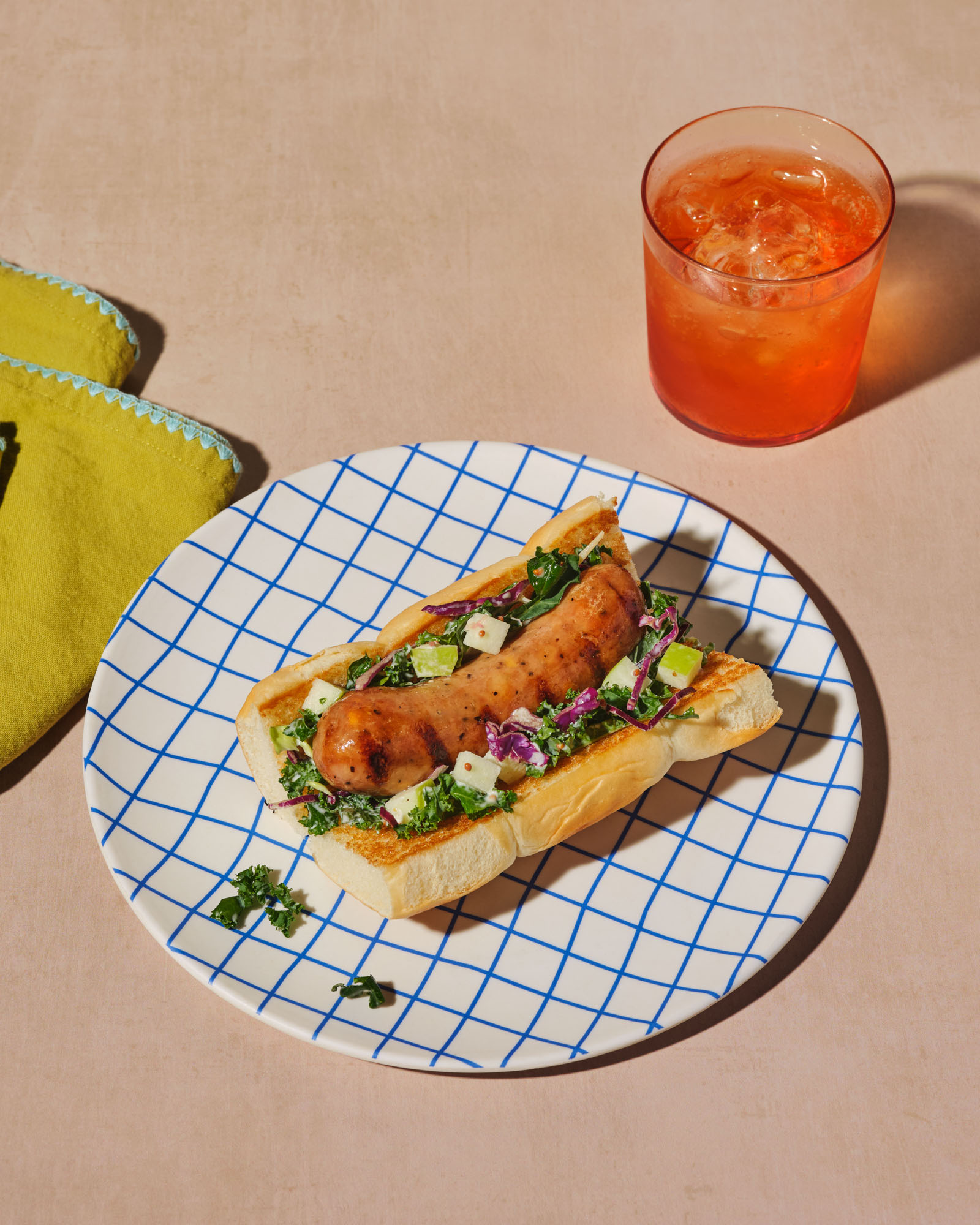
With its juicy, roasted-chicken flavor, this sausage plays beautifully with both fresh and cooked apples. Granny Smiths are the go-to here: crisp, tart, and endlessly versatile. For a quick lunch, pile sausage links into buns and top with a crunchy Granny Smith slaw, or drizzle them with applesauce for an effortless sweet-and-savory combo.
Italian Herb Chicken Sausage
Packed with fennel, basil, and Calabrian peppers, this sausage brings a punch of flavor to salads, grain bowls, and grilled kabobs. Add sweet or tart apples for freshness and contrast, then layer in extras like dried cranberries for brightness or pumpkin seeds for crunch to round it out.
Melty Cheddar Chicken Sausage
Host your own mini Oktoberfest with this cheddar-stuffed sausage. For a hearty, one-pan dinner, roast it with potatoes and onions, then serve alongside sautéed apples and cabbage or a side of applesauce for a sweet finish. We're also super partial to a Melty Cheddar dog topped with broccoli-apple slaw. And since it's soup season, why not pair some tart Granny Smith apples, healthy lentils, and savory Melty Cheddar in a one-pot weeknight wonder?
Keep the Apple Magic Going
Apple season doesn’t stop at pie. The beauty of apples—and sausage, for that matter—is how easily they sneak into every kind of meal. Slice them thin for your fall snack boards, roast them with your favorite chicken sausage, or get ambitious with something from our recipe hub. Whether you’re craving cozy weeknight dinners or easy snack ideas that hit that sweet-savory balance, we’ve got a juicy lineup waiting. Because when it comes to apples and sausage, there’s always room for one more bite.