
Corn is one of our most diverse crops. It gives us everything from tortillas to chowders, movie snacks to sweeteners. In the fall, it's the cornerstone of Halloween mazes and Thanksgiving centerpieces. It's a vegetable so glorious that the good people of Mitchell, South Dakota even built a palace out of it—and rebuild it every year.
Corn is a year-round staple. But in summer, it's truly king. Few sights bring us more joy than a glistening row of corn cobs sizzling over the grill alongside chicken sausage. And lucky for us, summer is also when corn is at its most delicious.
So how do we get the most out of our corn—dare we say, maizemaxx? How do you store corn to keep it fresh, and what are the best ways to cook it? How do you find the best cob for your buck?
We’re so glad you asked.
When Is Corn in Season?
While you can find corn in the frozen aisle, in the produce section, or in a can year-round, corn's undisputed season is summer. Peak corn season hits once the weather gets nice and warm—that heat triggers corn's sugar production and helps it ripen. Across the U.S., from June to October, you can find fresh corn, either pre-processed and packed into bags or still wrapped in its protective green husk.
What Are the Different Types of Corn?
In the U.S., we're mostly familiar with sweet corn, a "supersweet" hybrid variety developed to keep corn sweet longer. Once an ear of corn is picked, its sugars begin to turn to starches. In traditional corn varieties, up to half of the corn's natural sugars can convert to starch within 24 hours when left at room temperature, turning mouthwateringly sweet summer corn into a bland, mealy bite.
This supersweet corn is very different from traditional, heritage corn varieties. Corn originated in Mexico, where indigenous peoples have been living off it for thousands of years. Mexico is home to 59 native varieties, which vary in cob and kernel size and in color. This corn can come in a deep black, pale green, or red, and most aren't anywhere near as sweet as the supersweet varieties we're familiar with today.
The supersweet corn you typically see in U.S. grocery stores was developed to stay sweet for longer. Sweet corn has a longer shelf life than traditional varieties, making it possible to eat delicious cobs of the stuff even hours away from the nearest corn field.

How Do You Pick the Best Corn?
Not all ears of corn are created equal, but fortunately, finding a good one doesn't require a degree in agriculture.
The first thing to look for is a bright green husk that wraps tightly around the cob. That husk protects the kernels from drying out and helps preserve the corn's sweetness until you're ready to cook it. If the husk looks dry, brown, or loose, the corn has likely been sitting around for a while.
Next, check the silk (those stringy tassels poking out of the top). They should be slightly sticky and golden brown rather than black, brittle, or moldy. Resist the urge to peel back the husk while you're shopping, though. It might seem like a good way to inspect the kernels, but peeling back those protective leaves causes the corn to dry out and makes it harder for the next shopper to judge its freshness.
Finally, give the ear a gentle squeeze. The kernels underneath should feel plump and tightly packed with no obvious gaps. If everything feels full and firm, you've probably found a winner.
Fresh corn is one of the great joys of summer, so it's always worth checking your local farmers' market first. That said, many grocery stores source corn locally when it's in season, so you don't have to venture far from home to find a great ear. And if you don't have time to shuck it yourself, pre-shucked corn is perfectly fine, too… just be sure to keep it refrigerated until you're ready to cook.

What's the Best Way to Cook Fresh Corn?
It’s hard to go wrong with cooking corn, and the best way to cook it depends on what you’re looking for.
Boiling is the quickest option, producing juicy, tender kernels in just a few minutes. Grilling adds smoky flavor and a bit of char, which is why it commands the spotlight at a cookout. Roasting concentrates the corn's sweetness, while steaming preserves its delicate texture.
Cook it how you like. Just don’t overcook it. Fresh summer corn doesn't need much help. A few minutes of heat is usually all it takes to bring out its natural sweetness. Finish it with butter and flaky salt if you're feeling classic, or branch out with chili crisp, cotija cheese, fresh herbs, or a squeeze of lime.
How Should You Store Fresh Corn?
While corn is a summer vegetable, warmth is its enemy (weird, right?). It needs warm temperatures to ripen, but once it's harvested, those same warm temperatures speed up its sugar-to-starch conversion. That means your corn will stay sweetest when kept cool in the fridge—and will lose that sweetness if kept at room temperature.
Cobs of corn should keep their firmness and sweetness for at least a few days in your fridge before cooking. If you realize you have more corn than you know what to do with, you can always place cooked kernels in the freezer for a rainy day. Or you can try one of our recipe ideas below.
What Goes Well with Corn? Chicken Sausage Pairings & Recipes
The natural sweetness and earthiness of corn make it a great pairing for The Sausage Project's savory chicken sausages. In fact, it’s a pairing we’re slightly obsessed with.
One of the easiest ways to get dinner on the table is to throw corn and chicken sausage on the grill together. A plate of grilled corn on the cob and chicken sausage, served in a bun, with all manner of fixings, is a classic summer meal that's hard to beat. But if you're looking for more ideas for what to do with your corn bounty, see below.

Melty Cheddar Chicken
There's no better time than summertime to make succotash. The sauteed corn dish has Indigenous roots. The recipe can be as simple as sauteeing lima beans with corn, or you can add other ingredients like bell peppers, onions, or even bacon to the mix. Serve it with a grilled or pan-fried Melty Cheddar Chicken Sausage laid over top: The cheddar inside the sausage will bring all of the flavors together.
Melty Cheddar is also one of our favorite foundations for a next-level summer dog, and the ideal vessel for a slightly spicy, sweet corn relish. The swicy flavors are on full display in our Melty Cheddar Spicy Corn Relish recipe, which puts corn front and center where it belongs.
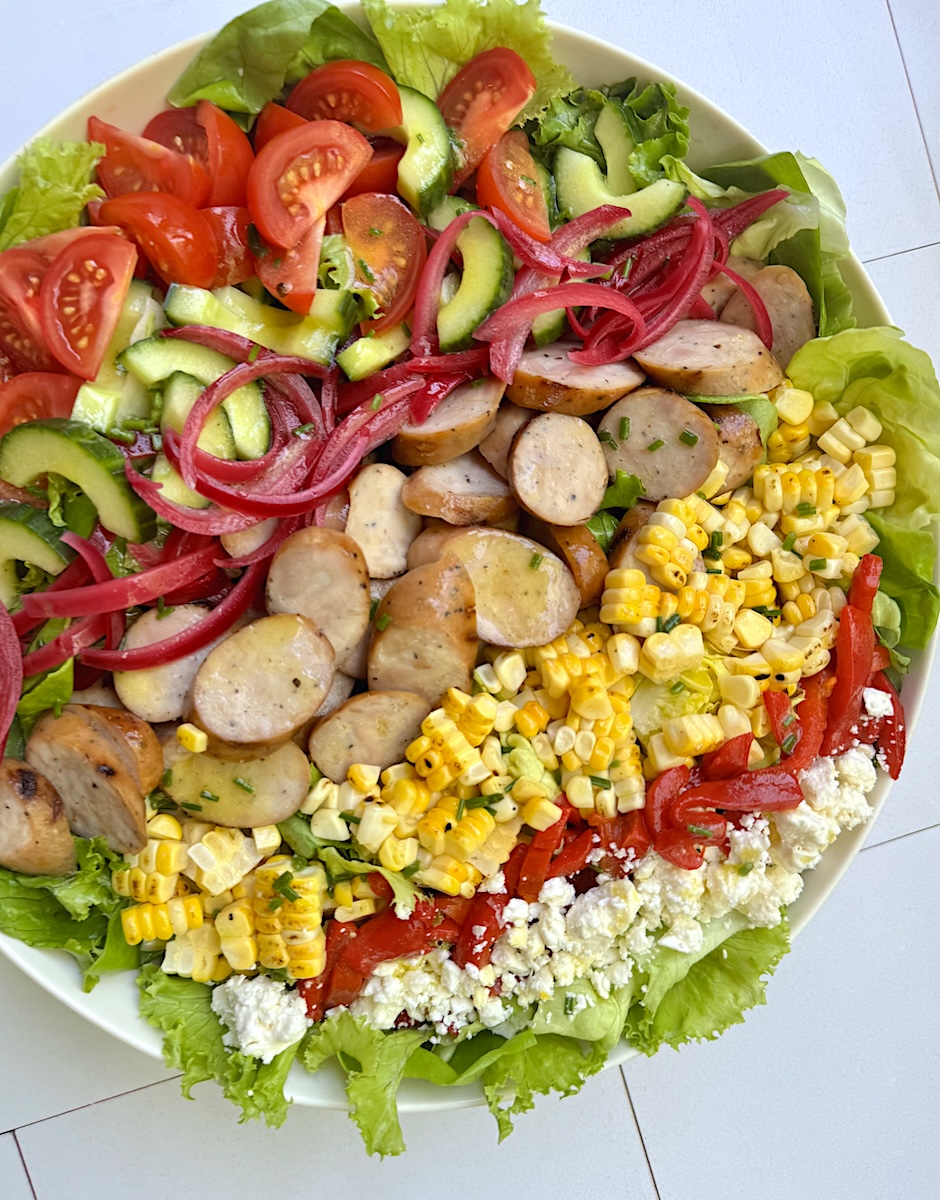
Classic Roasted Chicken Sausage
Corn and chicken go together like, well, corn and a lot of things, and since Classic Roasted Chicken Sausage is designed to go wherever rotisserie chicken does, the sky is the limit.
We’re particularly partial to adding a protein punch to classic Mexican street corn, which is why we crafted our own version of esquites to serve as a knockout summer side.
For those looking for a pasta salad—and, let’s be real, summer is also pasta salad season—our Farmers Market Orzo Salad recipe is loaded with sweet corn, tomatoes, peaches, cucumbers, and grilled Classic Roasted. Meanwhile, for those who want a “salad” salad, our Summer Chopped Salad recipe features corn in a starring role alongside tomatoes, cukes, feta, and juicy Classic Roasted.
Italian Herb Chicken Sausage and Corn Pasta Salad
Pasta salad is one of summer's greatest fridge-cleanout meals, and sweet corn deserves a starring role. Toss cooled pasta with Italian vinaigrette, sweet corn, Italian Herb Chicken Sausage medallions, and whatever else your farmers' market haul has to offer—think cherry tomatoes, mozzarella balls, cucumbers, cannellini beans, or chickpeas.
Because Italian Herb Chicken Sausage is studded with Calabrian chili peppers and herbs like basil, fennel, and parsley, it practically doubles as another layer of dressing. Better yet, this pasta salad only gets better after a night in the fridge, making it the perfect make-ahead meal for hot summer days.