
Sausage and mustard is a pairing that feels less like a culinary choice and more like an undisputed law of physics. A plump chicken sausage without a slather of Düsseldorf-born brown feels like an unfinished sentence. A ballpark hot dog without that bright yellow zigzag could never hold its own. And a platter of pigs in a blanket (or Chicks in a Quilt) without a squeeze of spicy-sweet honey mustard? You might as well skip the apps altogether.
Okay, maybe it’s not that dramatic. But the way mustard’s sharp, vinegary bite cuts through fat and salt like a katana just makes sense. Its acid balances out richness, playing the straight man to a sausage’s sizzling punchline. Meat and mustard is a pairing as old, potent, and satisfying as they come.
Here’s the thing, though: Even the sauciest among us are probably seeing just a sliver of what mustard has to offer. We grab a neon bottle of yellow or a jar of fancy Dijon and call it a day. Meanwhile, there’s an entire world of mustard out there, from grainy to powdered to sweet and terrifyingly hot, with roots stretching back thousands of years and a passport stamped in France, Germany, England, China, and beyond. Imagine: a zesty world tour hiding just inside your refrigerator door.
So next time you reach for the same old bottle, remember that mustard’s got range. Behold, our guides to the essential mustards... and how to best pair mustard and chicken sausage.

Yellow Mustard
This is the one you grew up with: the bright, lemon-hued stuff that turns up at every backyard barbecue and Little League concession stand. Mild yellow mustard seeds get blitzed with vinegar and a heavy dose of turmeric (the source of that traffic-light color), and there’s essentially no heat to speak of. What it lacks in sophistication, it more than makes up for in consistency.
Pair it with: A hot dog, obviously. But it’s also a surprisingly useful binder for dry rubs before pork or chicken hits the grill. The mustard helps the spices stick while adding a touch of acidity.
Dijon Mustard
Dijon starts with the same hot brown seeds as its darker cousin, but the hulls get strained out, leaving a creamy, pale, sharp spread that skips across your tongue and hits you right in the back of the nose. The tradition dates back centuries in France, where it was originally made with verjuice (the tart juice of unripe grapes). Today’s versions often use white wine for a softer, rounder character.
Pair it with: Vinaigrettes and pan sauces, where mustard helps hold the oil and vinegar together. Or use it to match the heat of Italian Herb Chicken Sausage, where sweet basil softens the sting and spicy Calabrian chili dances with Dijon’s velvety devil.

Brown Mustard
Never doubt the little guys. Brown mustard leans on smaller, more pungent seeds that pack a powerful punch, giving it a distinctive bite without sacrificing smoothness. Think of it as yellow mustard’s older sibling who moved to the city and started drinking espresso.
Pair it with: Pastrami on rye, peppery Classic Roasted Chicken Sausage, or a a huge sausage & peppers hoagie (recipe here). Anything big and bold enough to go toe to toe with this heavyweight condiment.
Whole-Grain Mustard
This one’s all about texture. Stop grinding as soon as the seeds bind into a chunky paste, and you’ve got whole-grain mustard, with every spoonful speckled with little pops of flavor. Because many of the seeds stay intact, it’s usually a bit milder than Dijon, and twice as fun to eat.
Pair it with: Ooey-gooey Melty Cheddar Chicken Sausage, pork chops, or a thick-cut ham sandwich. It’s for anywhere you want mustard to play a supporting role rather than serve as a garnish.
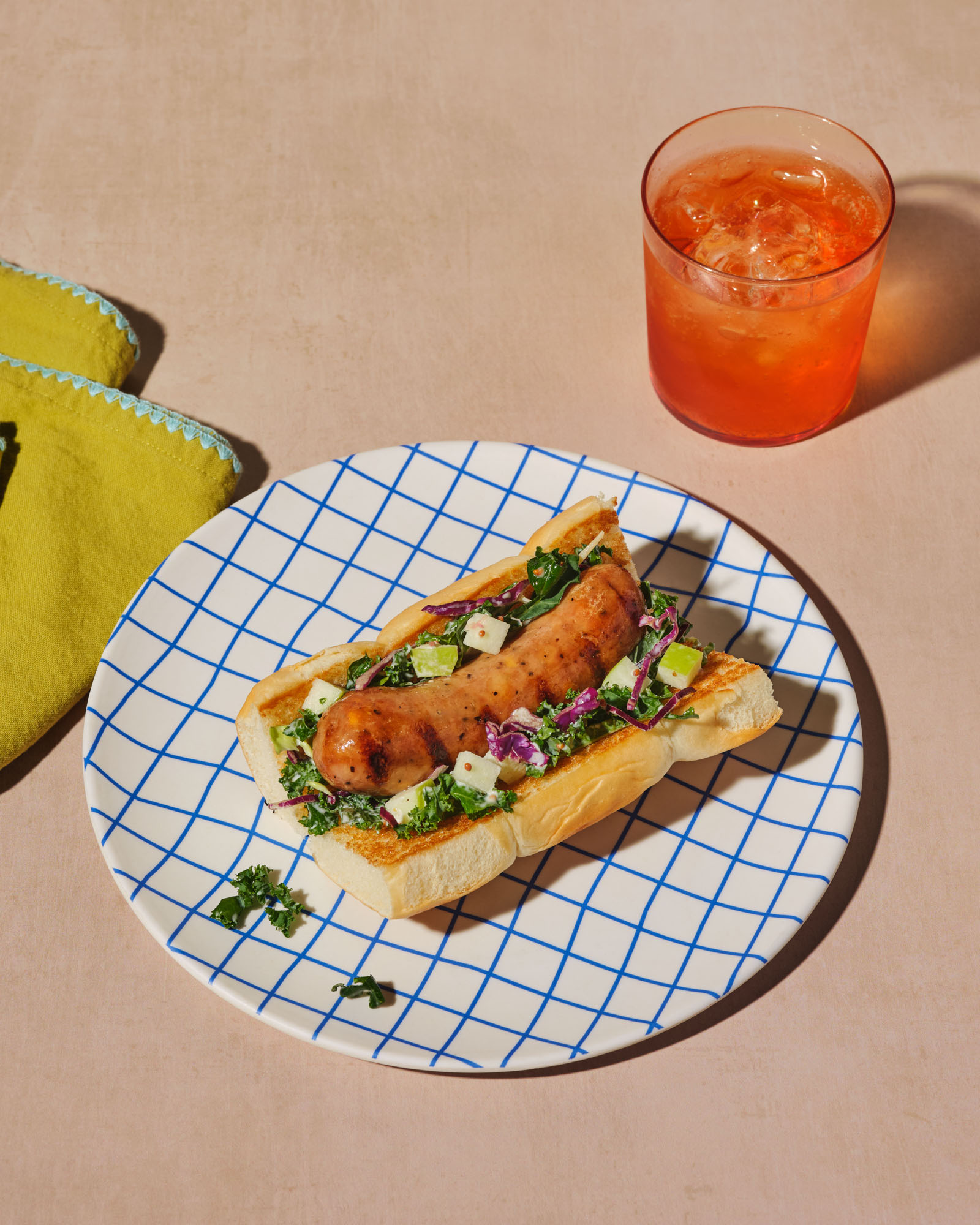
Honey Mustard
Sweet meets sharp in this silky drizzle, often rounded out with a little extra sugar, corn syrup, lemon juice, or even mayonnaise. The honey tames mustard’s bite, turning it into a kid-friendly crowd-pleaser.
Pair it with: Chicken tenders, all day. It’s also great on cold-cut sandwiches, whisked into a salad dressing, or as a dip for pretzel nuggets and pretzel dogs. And it’s fantastic on a slaw dog (recipe here).
Moutarde à l’Ancienne
If whole-grain mustard is chunky peanut butter, moutarde à l’ancienne (aka old-style mustard) is the extra-crunchy kind. This traditional French take keeps the seeds whole in a loose, gritty paste that’s more tangy than fiery, with a flavor profile built for mouthfeel rather than punch. The French were making versions of it long before anyone thought to put mustard in a squeeze bottle.
Pair it with: Swirl it into a cream sauce, turn it into a warm glaze for green beans or asparagus, or spread it on soft cheeses and cured meats.

English Mustard
Where Dijon gets its tang from wine or vinegar, English mustard uses little to no acid, so the raw heat of its yellow and brown seeds comes through in fiery fashion. The milder yellow seeds keep it from going full HAM like Chinese hot mustard, but it’s definitely no shrinking violet. For the fullest flavor, buy it as a powder and mix it with cold water about 10 to 15 minutes before serving.
Pair it with: Roast beef sandwiches, a dab alongside a Sunday roast, juicy chicken sausages in a buttery toad in the hole (recipe here), or any pan sauce that needs some added backbone.
German Mustard
There’s no single “German mustard.” Like the country’s landscape, its mustards vary by region, from Düsseldorf’s sharp, assertive varieties and spiced, seedy twists to milder Dijon-style spreads and Bavaria’s famously sweet versions.
Pair it with: Sausage, naturally. Whether your links are braised, smoked, or char-grilled, you can’t go wrong, especially when you’re livening up a Classic Roasted link or cutting through the richness of Melty Cheddar.
Chinese Hot Mustard
Skip the vinegar, stick to the hottest seeds, and you get this raw, combustible condiment. Classic Chinese hot mustard starts with finely ground brown or black seeds whisked with cold water, and it gets fiercely spicy as the mustard compounds activate. That’s why the homemade stuff can outgun the packets at the bottom of the takeout bag. (Squeeze one onto a freshly fried egg roll, though, and you won’t hear any complaints from us.)
Pair it with: Egg rolls, pork dumplings, or any other umami-packed dish in search of a kick.